Cooling Performance That Avoids Mid-Summer Failures
Refrigerant Checks in Plano and throughout the Chicagoland area for air conditioning systems with reduced cooling output or longer runtime than previous seasons
Low refrigerant levels in air conditioning systems result from slow leaks in coil joints, valve connections, or line sets, and when charge levels drop below manufacturer specifications, compressors work harder to achieve set temperatures while delivering weaker cooling output. Your air conditioner cycles longer on hot days, indoor humidity rises, and energy bills increase as the system struggles to compensate for insufficient refrigerant. J&C HVAC Services, Corp. performs refrigerant inspections and recharge services for residential and light commercial AC systems in Plano and across the Chicagoland area, identifying leaks and restoring proper charge levels that support efficient cooling throughout summer.
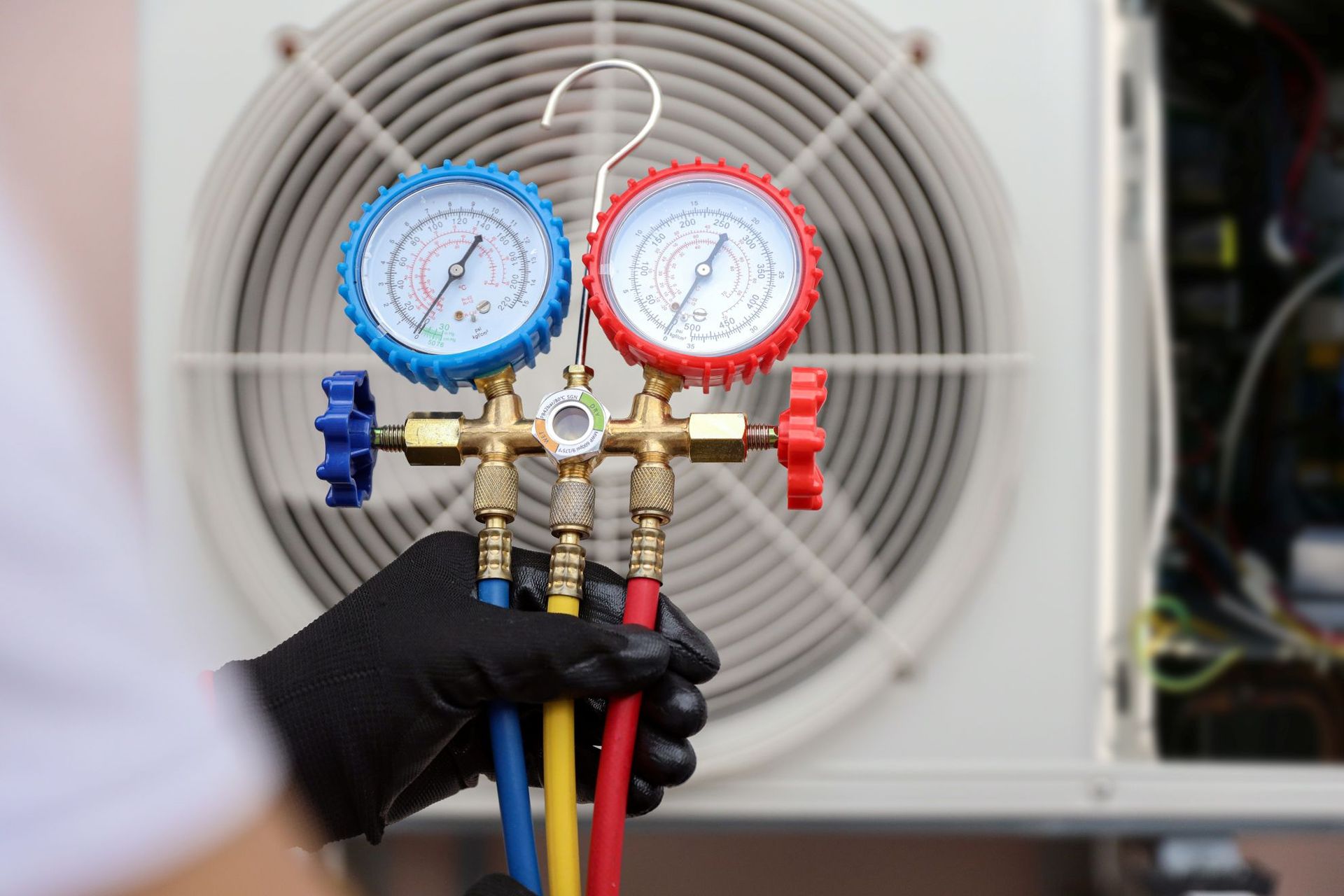
Refrigerant checks involve measuring pressures at both the low and high sides of the system, comparing readings to equipment specifications, and using electronic leak detectors or UV dye to locate breaches in refrigerant lines. Technicians repair identified leaks before adding refrigerant, ensuring the system maintains proper charge rather than requiring repeated service visits as levels drop again. This preventative maintenance reduces system strain and helps avoid summer breakdowns when outdoor temperatures peak and compressor failure becomes more likely.
Schedule a refrigerant inspection to verify your cooling system's charge levels before seasonal demand increases.
Why Proper Refrigerant Levels Matter for Cooling Efficiency
The inspection process includes checking for oil residue around coil connections that indicates active leaks, testing pressure differential across the evaporator coil, and verifying subcooling and superheat measurements that reveal whether the system is undercharged or overcharged. Both conditions reduce efficiency, with low refrigerant causing compressors to overheat and excessive refrigerant preventing proper vapor compression.
Once refrigerant levels are corrected and leaks are sealed, your air conditioner delivers consistent cooling without extended runtimes, indoor temperatures stabilize within a few degrees of thermostat settings, and compressor cycling returns to normal intervals rather than near-continuous operation. You notice lower electricity consumption on utility bills during cooling months, and the system responds more quickly when adjusting set points during afternoon heat.
The service includes documenting baseline refrigerant pressures for future comparisons, testing system performance after recharge to confirm proper operation, and providing maintenance recommendations that extend the interval between service needs. Refrigerant checks apply to split systems, packaged units, and heat pumps, with each requiring specific charge levels based on line length and equipment capacity.
Answers to Frequent Service Questions
Homeowners and business operators often ask how to recognize low refrigerant symptoms, how long repairs take, and what causes leaks in the first place.
What symptoms indicate low refrigerant in an air conditioning system?
Reduced cooling output, ice buildup on evaporator coils, hissing sounds near refrigerant lines, and longer system runtimes during hot weather all suggest refrigerant levels have dropped below optimal charge, requiring inspection and potential recharge.
How do technicians locate refrigerant leaks in HVAC systems?
Electronic leak detectors sense refrigerant gases around coil joints and line connections, while UV dye added to the system glows under blacklight at leak points, allowing precise identification of breaches that require soldering or component replacement.
When should refrigerant be checked rather than waiting for system failure?
Annual inspections before cooling season help identify slow leaks early, preventing compressor damage from low-refrigerant operation and avoiding emergency service calls during Illinois summer heat when HVAC contractors experience high demand.
What causes refrigerant leaks in air conditioning systems?
Vibration loosens flare connections over time, corrosion from moisture exposure weakens coil tubing, and thermal expansion cycles stress brazed joints, with most leaks developing at connection points rather than along straight refrigerant line runs.
How does proper refrigerant charge affect energy costs?
Correctly charged systems achieve set temperatures using shorter compressor runtimes and lower electrical draw, reducing cooling costs by 5 to 15 percent compared to undercharged systems that run continuously without reaching desired indoor temperatures.
J&C HVAC Services, Corp. provides refrigerant services that restore cooling efficiency and prevent equipment damage from improper charge levels. Request an inspection appointment to assess your system's refrigerant status and address any performance concerns before peak cooling demand arrives.