Cooling Systems Designed for Illinois Summers
AC Install in Plano and across the Chicagoland area for properties with aging units that struggle during extended heat waves
High-efficiency cooling systems reduce electricity consumption while maintaining consistent indoor temperatures during July and August heat. J&C HVAC Services, Corp. installs air conditioning systems sized to your home's actual cooling load, accounting for insulation, window exposure, and internal heat sources that affect how quickly your property gains heat on 90-degree days. Proper refrigerant charge and airflow calibration at startup prevent the short cycling and high humidity problems that occur when systems are installed without load calculations.
New AC installation addresses inefficient compressors, refrigerant leaks, and worn blower components that cause uneven cooling and frequent breakdowns. Systems installed before 2010 typically operate at 10 SEER or lower, meaning they consume significantly more electricity than current 14 SEER minimum-efficiency models. Upgrading to a 16 SEER or higher unit reduces cooling costs while improving humidity control, which matters during the humid stretches common in northern Illinois summers.
Request a cooling system consultation to evaluate efficiency options and determine the right capacity for your property.
Why Proper Installation Improves Cooling Performance
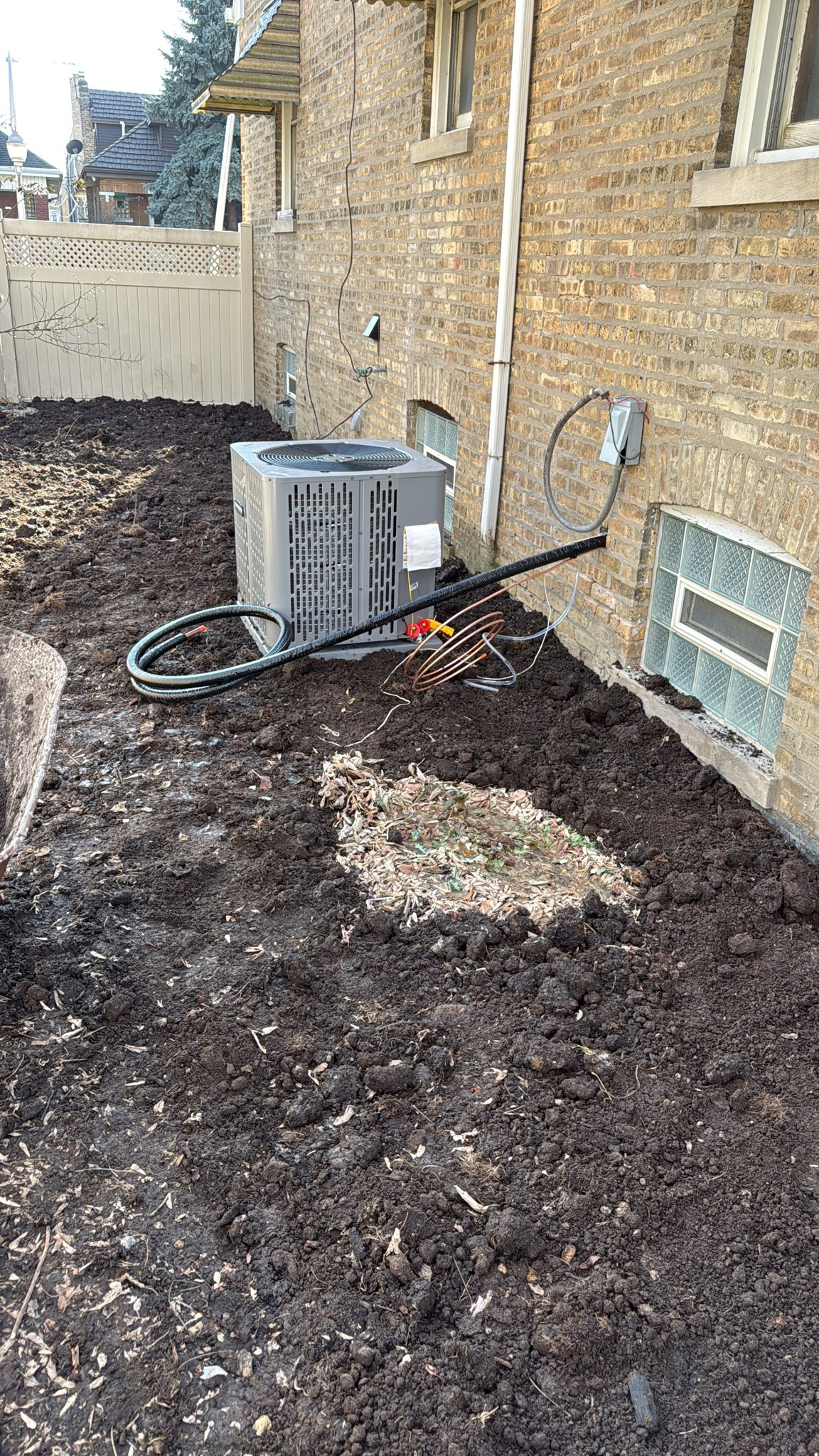
Air conditioning installation involves mounting the outdoor condenser on a level pad, running refrigerant lines without kinks or excess length that restricts flow, and charging the system to manufacturer specifications using superheat or subcooling measurements rather than relying on pressure readings alone. Incorrect refrigerant charge reduces capacity and efficiency, causing the system to run longer without reaching set temperatures. Airflow must also match the tonnage rating, typically 400 cubic feet per minute per ton, to ensure the evaporator coil removes heat and moisture effectively.
After installation, you'll notice rooms cool evenly without hot spots near windows or upper floors, and indoor humidity stays comfortable rather than feeling clammy even when the thermostat reads 72 degrees. The system reaches set temperature and shuts off rather than running continuously, which reduces wear on the compressor and blower motor. J&C HVAC Services, Corp. verifies airflow, refrigerant charge, and electrical connections before placing the system into service, ensuring reliable operation from the first cooling cycle.
Replacement solutions address units with failed compressors, refrigerant leaks in the evaporator coil, or condenser fans that no longer move enough air across the coil to reject heat efficiently. Two-stage or variable-speed systems run at lower capacity during mild weather, reducing electricity consumption and improving humidity removal compared to single-stage units that operate at full power whenever they cycle on.
Common Questions About This Service
Air conditioning decisions involve balancing upfront costs with long-term efficiency and understanding how system sizing affects comfort and operating expenses.
What factors determine the right AC size for my home?
Load calculations account for insulation levels, window area and orientation, ceiling height, and internal heat sources like kitchens and electronics. A three-ton unit might be correct for one 1,800-square-foot home but inadequate for another with poor insulation and west-facing windows, which is why square footage alone doesn't determine proper sizing.
How does SEER rating affect my electricity bills?
SEER measures cooling output divided by energy input over a typical cooling season. A 16 SEER system uses roughly 25 percent less electricity than a 12 SEER unit to produce the same cooling, which translates to lower monthly bills during the summer months when your AC runs most frequently.
When should installation happen to avoid peak-season delays?
Scheduling between March and May ensures availability before the summer rush and allows time to address any ductwork or electrical upgrades needed before heat arrives. Installation during cooler months also makes it easier to test system operation without relying on it for daily comfort.
What installation practices affect long-term reliability?
Brazing refrigerant line connections with nitrogen flowing through the lines prevents copper oxide scale from forming inside the tubing, which can clog the expansion valve or damage the compressor. Mounting the condenser on a stable pad prevents vibration and refrigerant line stress that leads to leaks.
Why does ductwork matter for new AC performance in Plano?
Leaky or undersized return ducts reduce airflow across the evaporator coil, causing it to freeze and reducing cooling capacity. Sealing supply ducts in attics or crawlspaces prevents cooled air from escaping before reaching living spaces, which is especially important when outdoor temperatures exceed 90 degrees for consecutive days.
J&C HVAC Services, Corp. provides cooling system estimates that include load calculations and efficiency comparisons. Arrange an on-site evaluation to review AC options suited to your home's cooling requirements and budget.