Heating Systems Built for Midwest Winters
Furnace Install in Plano and throughout the Chicagoland area for homes facing higher heating costs and unreliable cold-weather performance
A failing furnace shows up as uneven room temperatures, constant cycling, or a sudden spike in monthly heating bills during January and February. J&C HVAC Services, Corp. installs energy-efficient heating systems sized to match your property's actual heat load requirements and designed to handle the extended cold stretches common across northern Illinois. Proper sizing prevents short cycling and ensures the system runs efficiently when outdoor temperatures drop below freezing for days at a time.
Furnace installation involves removing the old unit, verifying ductwork integrity, confirming gas line connections meet current code, and installing a system matched to your square footage and insulation levels. Oversized furnaces cycle on and off too frequently, reducing efficiency and wearing components faster, while undersized systems run continuously without reaching set temperatures. Selecting the correct BTU output based on heat loss calculations rather than matching the old unit's capacity prevents both problems.
Schedule a property evaluation to determine the right furnace capacity and efficiency rating for your heating requirements.
What Changes After Installation Completes
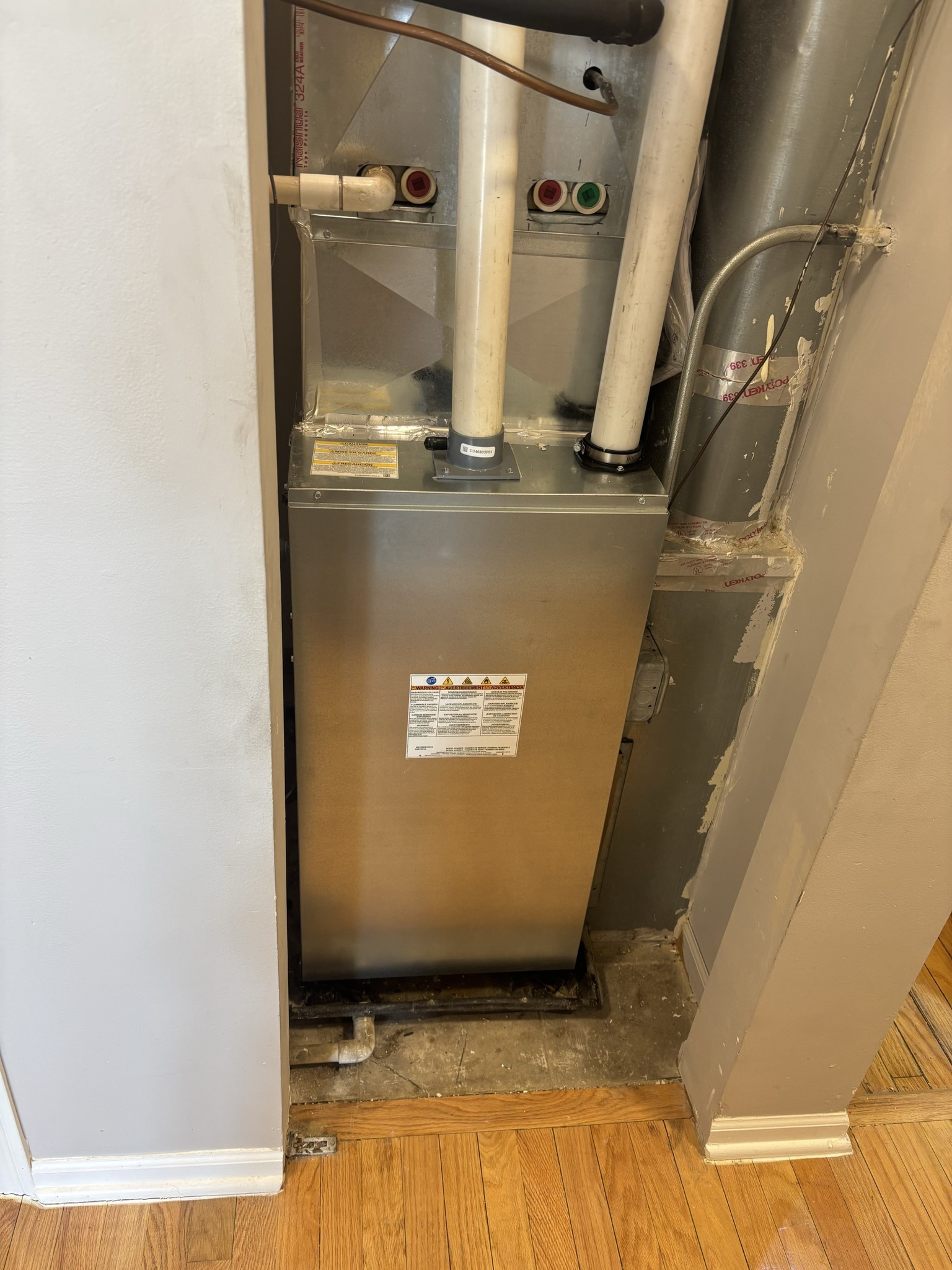
New furnace installation replaces worn heat exchangers, blower motors, and ignition systems that cause uneven heating and frequent breakdowns. Energy-efficient models reduce fuel consumption by improving combustion efficiency, meaning less natural gas is burned to produce the same amount of heat. Modern systems also distribute air more evenly through improved blower design, eliminating cold spots in rooms farthest from the furnace.
Once the system is operational, you'll notice consistent temperatures across all rooms, quieter operation without the rattling or banging sounds from older units, and lower monthly heating bills starting with the first full billing cycle. J&C HVAC Services, Corp. installs systems that maintain set temperatures without constant cycling, which extends component life and reduces wear on the blower motor and gas valve. Properly installed furnaces also improve indoor air quality by sealing combustion gases away from living spaces and reducing dust circulation from leaky ductwork connections.
Installation includes startup testing to confirm ignition sequence, airflow volume, and thermostat communication function correctly before the system enters regular operation. Replacement services address outdated systems that use standing pilot lights instead of electronic ignition, which wastes fuel during non-heating periods. Systems installed before 2010 typically operate at 80 percent efficiency or lower, meaning 20 cents of every heating dollar is lost through the exhaust vent.
Questions Before Starting Your Project
Furnace installation decisions depend on your property's heating demands, existing ductwork condition, and how long you plan to stay in the home.
What happens if the new furnace is sized incorrectly?
Oversized systems cycle frequently and never reach optimal efficiency, while undersized units run continuously without maintaining comfort during cold snaps. Proper sizing uses Manual J load calculations that account for insulation levels, window area, and air leakage rather than simply matching the old unit's capacity.
How does a high-efficiency furnace reduce heating costs?
Units rated at 95 percent AFUE or higher extract more heat from combustion gases before venting, meaning less fuel is needed to produce the same warmth. In Plano's winter climate, upgrading from an 80 percent to a 95 percent efficient model can reduce natural gas consumption by roughly 15 to 18 percent over a heating season.
When should I replace rather than repair an existing furnace?
Systems older than 15 years with cracked heat exchangers, frequent ignition failures, or blower motor problems typically cost more to repair than the remaining useful life justifies. Replacement prevents mid-winter breakdowns and avoids the safety risks associated with cracked heat exchangers leaking combustion gases.
What installation steps affect long-term reliability?
Sealing all ductwork connections prevents heated air from escaping into unconditioned spaces, and installing a two-stage or modulating gas valve reduces wear by allowing the furnace to run at lower capacity during milder weather. Correct return air sizing ensures the blower doesn't overwork to pull enough air across the heat exchanger.
Why does ductwork condition matter during furnace replacement?
Leaky or undersized ducts reduce system efficiency by 20 to 30 percent, negating the benefits of a high-efficiency furnace. Sealing major leaks and insulating ducts in unconditioned spaces ensures the heated air reaches living areas rather than heating your crawlspace or attic.
J&C HVAC Services, Corp. provides detailed installation estimates that account for your property's heating requirements and existing ductwork condition. Request an on-site consultation to review furnace options matched to your home's heat load and insulation levels.